Wet windows every morning, a musty smell in the bedrooms, black spots creeping along the window frames. If that sounds like your place, you’re not alone. Condensation and damp are some of the most common winter problems in homes across Palmerston North, Feilding, Whanganui and the wider Manawatū.
The good news: it can be fixed. We find out why your home is damp and put the right solution in place.
Talk to us about your homeCall (06) 355 4479
Why are my windows crying?
Everyday living puts a lot of moisture into the air: showers, cooking, drying clothes inside, even breathing while you sleep. When that warm, moist air touches a cold window or wall, it cools down and turns back into water. That’s the “crying” you see each morning.
Two things make it worse:
- Cold rooms. Bedrooms and back rooms that never get properly heated have the coldest windows and walls, so that’s where condensation and mould build up first.
- Stale air that never leaves. Modern homes are well sealed, so the moisture has nowhere to go unless the house is ventilated.
Left alone, damp can lead to mould on walls, ceilings, curtains and window frames, a musty smell, and a home that feels colder and is harder to heat.
How we fix it
Every home is different, so we start by looking at yours. Most damp problems are solved with one, or a mix, of these:
Ventilation systems
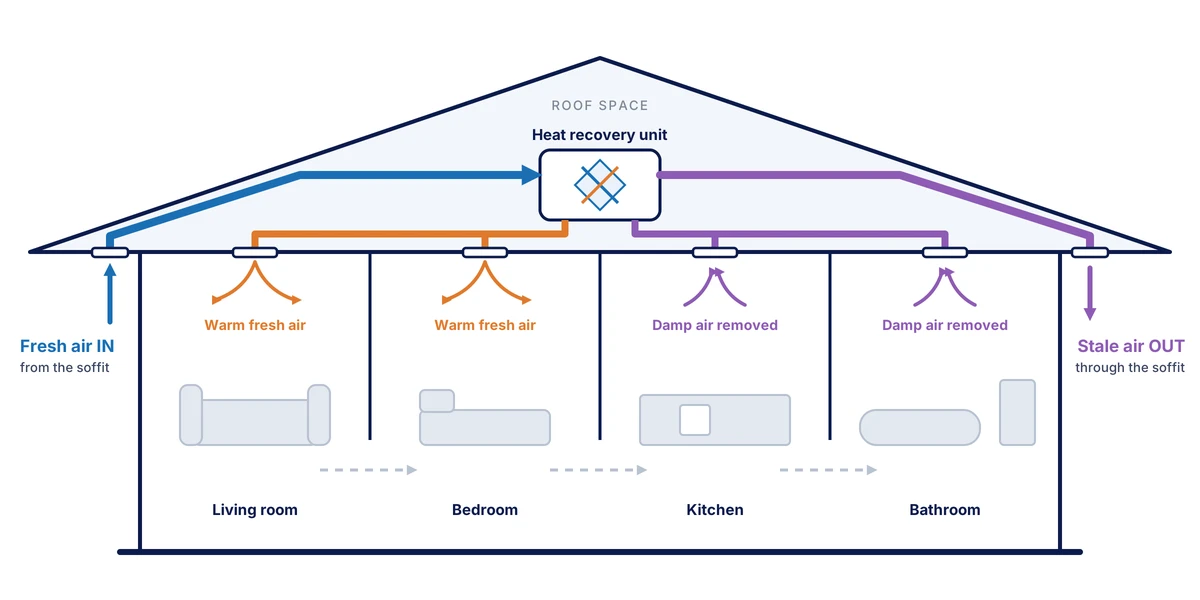
A ventilation system replaces stale, moist indoor air with fresh, filtered air, quietly and all year round. Some systems also recover heat from the outgoing air, so you keep more of the warmth you’ve paid for. Good ventilation is one of the most effective ways to stop condensation at its source.
Heat transfer systems
Most homes have one warm room, usually the lounge with the heat pump or fire, and several cold ones. A heat transfer system moves warm air from that room into the bedrooms and hallways. Warmer rooms mean warmer windows and walls, so far less condensation forms.
Heat pumps
A home that is evenly and properly heated stays drier. A heat pump is one of the most efficient ways to heat your home, and many models also have a dry mode that helps reduce moisture in the air.
Not sure which one you need?
That’s what we’re here for. Every house is different: its size, how it’s built, where the sun hits and how you live in it all make a difference. Talk to us and we’ll recommend what will actually work for your home, with no pressure.
Quick tips you can start today
- Open windows for 10 to 15 minutes each morning to let moist air out.
- Use extractor fans when you shower and cook, and leave them running a few minutes afterwards.
- Dry clothes outside or in a vented dryer where you can.
- Wipe condensation off windows and sills each morning.
- Pull curtains back during the day so window frames can dry out.
These help, but if the windows are still wet every morning, the house needs better ventilation or heating, and that’s where we come in.
Serving homes across the Manawatū: Palmerston North, Feilding, Ashhurst, Levin, Whanganui, Dannevirke, Marton, Bulls and surrounding areas. See all areas